
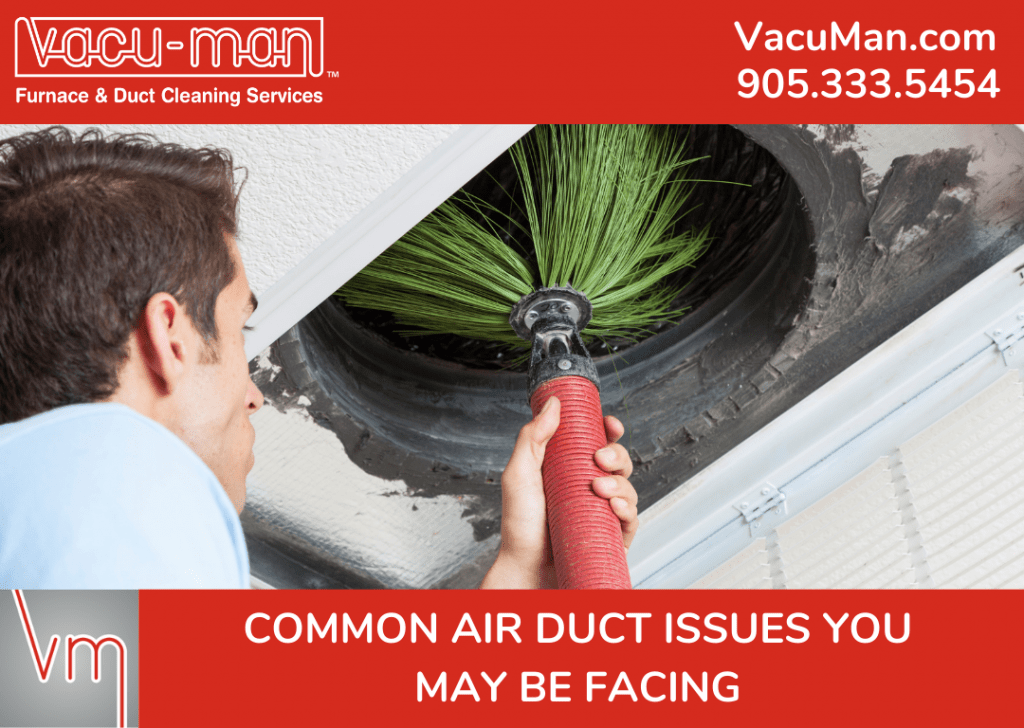
Common Air Duct Issues You May Be Facing
Air ducts move conditioned air from your HVAC system into your home through supply registers, and pull stale air back out through return registers. When something goes wrong along that path — a leak, a blockage, damaged insulation — your system has to work harder, your energy bills climb, and your comfort suffers. Duct leaks in particular are a major contributor: some HVAC industry estimates put average air loss through leaking ducts at 20-40% of total circulated air. Here are five common issues to watch for, and what to do about each one.
5 Common Air Duct Issues You May Be Facing
- Poor Airflow: Perhaps, you have noticed that the air doesn’t flow properly from your HVAC system. The air ducts are probably responsible for this issue. HVAC ducts come in different shapes and sizes and can be made out of different materials. Failure to use the appropriate ducts may obstruct the free flow of air and will prevent the system from working efficiently. If the ducts are not fixed properly, they won’t carry air the way they should. This will cause unnecessary strain on the air conditioner or heating system creating more damage in the future.
- Dirty Filters: Your duct filters are probably clogged with dirt and if you don’t check them or maintain them regularly, your HVAC system will not function properly. Ducts carry out a sweeping process— they remove air that has been in the environment and replaces it with fresh air. During this process, the air sweeps off particles, dust, pet hair, and whatever else that’s light enough to be sucked up. But these materials end up clogging the ducts and causes the filters to be contaminated with dirt. This prevents the air ducts from purifying the air effectively. Check your duct filters regularly to ensure that they are not clogged with dirt.
- Noticeable Noises: Is your HVAC system making weird noises? A quiet hum while it runs is normal — that’s just air moving through the system. But different noises point to different problems: rattling or banging often means loose duct connections, whistling can mean a blocked or overly restricted return, and screeching is more likely a furnace component than the ductwork itself. If a noise is new, loud, or persistent, it’s worth having it checked before the underlying issue gets worse.
- Poor Insulation & Sealing: Again, getting good installation cannot be overestimated. If your ducts are not properly insulated, heat will escape from them. The sealing also helps to keep unwanted dirt, rodents, and insects away from your ductwork. If you have insects or pests wandering into your home and you haven’t figured out where they come from, have your ducts checked immediately before an infestation can occur.
- Crushed or Kinked Ductwork: If your home has flexible ductwork, check for kinks, twists, or crushed sections — these are a distinct problem from leaks and just as common. Flexible ducts can get pinched behind furniture, bent too sharply during installation, or crushed if something heavy is set on top of them in an attic or crawl space. Even a partial crush point restricts airflow the same way a clog would, forcing your system to work harder for the same result. A visual inspection of accessible ductwork can often catch this before it turns into a bigger efficiency problem.
Practical and Effective Solutions for Common Air Duct Issues
What should you do when you believe there is an issue with your air ducts? It’s an easier solution than you think. Here are five practical and effective tips that can help you maintain your air ducts and keep them in good condition:
Examine Your Air Ducts:
This is the first step you should take before anything else. Sometimes it’s as simple as looking into your vents and finding an obstruction. Make sure nothing is in the way or surrounding the air ducts to ensure better airflow. Check the sealing at the vents and ducts as well. If you find holes or spaces, you should have them looked at and sealed immediately.
Replace Your Filters:
Some filters can last for six months, while others should be replaced monthly. You should examine your current filters. If they are high-end, they tend to last longer. To be safe, however, you should inspect your filters monthly and make note of the date you’ve last checked or replaced them. A good air filter recommendation is the VM3 Filter. Not only are they cost-effective, but they also provide the best air flow and protection from dust, pollen and debris.
Repair Leaks:
Unless you’re an expert, you may have trouble finding leaks. This is why inspection of visible external parts is so important. Once you find that everything else is in place but there is still an issue, you can then decide to call a professional for an inspection to resolve issues such as leaks.
Clean Out the Ducts:
This is a good option if you like to get your hands dirty. If not, then I have a suggestion for you. To clean your air ducts, you will need a nose cover, a vacuum cleaner, cleaning cloths, a screwdriver, and a brush. Firstly, wear the nose cover to minimize your exposure to dust and allergens. Next, you should cover the supply register since you don’t want to fill your home with dirty air and debris. After that, turn on the fan to allow the accumulated dust to move freely and clean both registers. You can now turn off the power, unscrew the vents and vacuum the ducts. Or, to skip the process entirely, you could hire an air duct cleaning company such as Vacu-Man to get your ducts professionally cleaned.
Professional duct cleaning services do a more thorough job because technicians are trained to spot these issues and have access to high-power vacuums and tools most homeowners don’t. Vacu-Man specializes in air duct cleaning, with over 45 years of experience diagnosing and resolving exactly these kinds of issues. Contact us here to speak with a professional, or get your free estimate today.
Frequently Asked Questions
What's the most common air duct issue?
Leaks at joints and connections are among the most common — some HVAC industry estimates suggest homes can lose 20-40% of circulated air this way. Dirty filters and poor insulation are also frequent culprits behind reduced efficiency.
Can I fix air duct issues myself?
Some, yes — replacing filters, sealing visible gaps, and clearing obstructions around vents are manageable DIY tasks. Leaks inside the ductwork, crushed sections in hard-to-reach areas, and full duct cleaning are best left to a professional with the right tools.
How do I know if my ducts are crushed or kinked rather than just dirty?
Crushed or kinked ductwork usually causes a sudden, localized drop in airflow to specific rooms, often after renovation work or something being moved in an attic or crawl space. Dirty ducts tend to cause a more gradual decline in airflow and air quality across the whole system.
How often should air ducts be inspected?
A visual check for obstructions, damaged insulation, or loose connections is worth doing at least once a year, with a full professional cleaning every 3-5 years depending on your household.