
Preparing Air Quality for a New Baby: A Nursery Checklist
Preparing a nursery is a good time to think about air quality, because babies sleep 14 to 17 hours a day in that room and breathe more air for their size than adults do. Focus on reducing dust and allergens: a clean HVAC system, a good furnace filter, gentle ventilation, and low-VOC choices for the room.
Why does nursery air quality matter for a baby?
Nursery air quality matters because babies spend most of their day in that one room and their bodies are still developing. According to the Government of Canada, infants and children breathe in more air relative to their body weight than adults, which means the quality of the air in the nursery has an outsized effect.
This is not a reason to worry, just a reason to prepare sensibly. A newborn sleeps the majority of the day, almost always in the nursery, so the air circulating through that room is most of what they breathe in the early months. Setting the room up with cleaner air in mind is a practical, one-time effort that pays off through those long hours of sleep. The goal is simple: reduce the dust and allergens moving through the space.
Where does the nursery’s air actually come from?
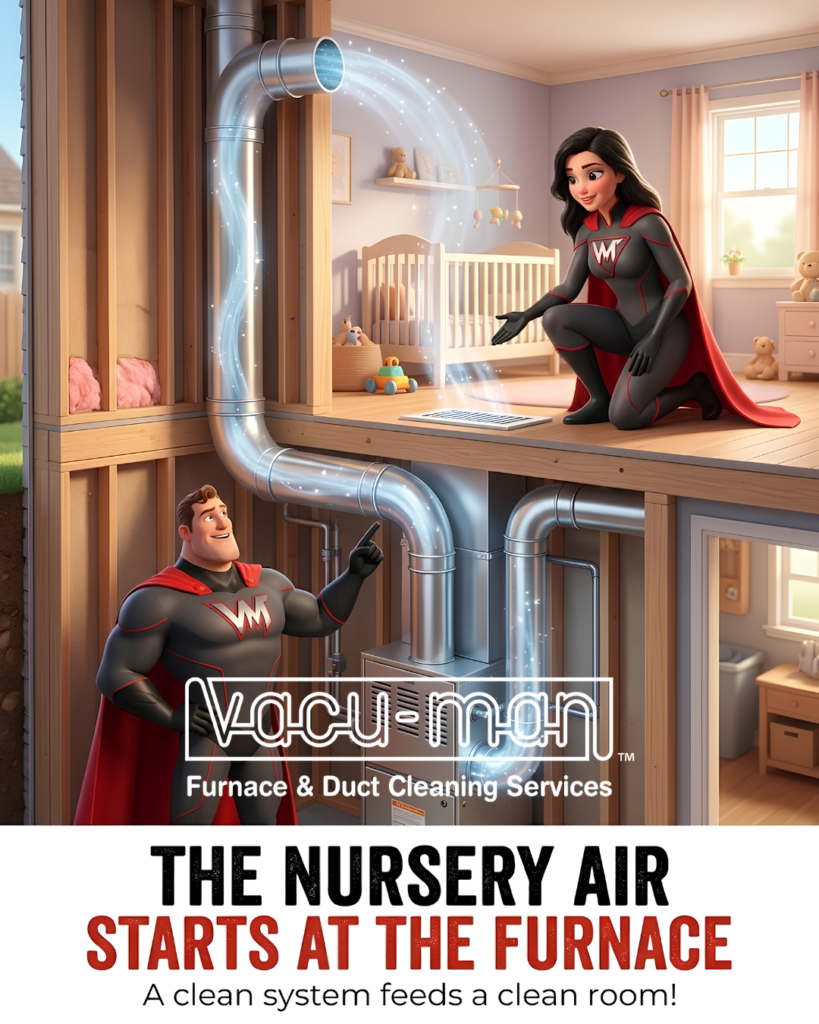
Most of the air in a nursery comes through the home’s HVAC system. The furnace or air handler pulls air in, conditions it, and pushes it out through the supply vent in the nursery, which means whatever is inside the ductwork ends up in the room. A clean system delivers cleaner air.
This is the part parents tend to overlook. You can wash every soft surface in the nursery and still have dusty air if the duct feeding the room is lined with years of buildup. Every time the system runs, that buildup gets carried into the space. The register in the nursery is the last step of a long path that starts at the furnace, so the condition of the whole system matters, not just the room itself.
Should I have the ducts cleaned before the baby arrives?
Having the ducts cleaned before a baby arrives is a reasonable clean-start step, especially if you have recently moved in, finished a renovation, or cannot remember the last cleaning. It removes the dust, debris, and allergens held in the system so they are not circulating into the nursery from day one.
It is worth being clear about what this does and does not do. A cleaning removes the dust and allergens built up inside the ductwork, which may reduce how much circulates through the home. It is not a medical treatment and does not prevent or cure allergies, asthma, or any illness. Think of it the way you think of washing the nursery bedding before use: a sensible way to start clean, not a health guarantee. If a renovation was involved, it matters more, since drywall dust and construction debris are especially hard on an HVAC system and settle deep in the ducts.
What furnace filter is best for a nursery?
For a home with a nursery, a furnace filter in the MERV 8 to 13 range is the practical choice. Higher-rated filters capture more fine particles, but the denser media restricts airflow, so the filter has to match what your furnace can handle. A filter your system cannot support does more harm than good.
Whatever rating you choose, changing it on schedule matters more than the number on the package. A clogged filter stops working and restricts airflow to the whole house, including the nursery. Set a reminder to check it monthly and replace it as needed. If you want to move toward the higher end of the range for finer filtration, confirm your furnace can accommodate a MERV 13 without straining the blower, and have a professional check if you are unsure.
How do I keep dust down in the nursery?
Beyond the HVAC system, a few habits keep nursery dust low: wash bedding in hot water regularly, damp-dust surfaces rather than dry-dusting, keep clutter and dust-collecting soft furnishings to a minimum, and vacuum with a good filter. These reduce the dust that settles and gets stirred back into the air.
Damp-dusting is the small change that makes the biggest difference, because dry-dusting mostly lifts particles into the air rather than removing them. Keeping the floor clear and choosing washable items over decorative dust-catchers also helps. None of this is about a spotless, sterile room, which is neither realistic nor necessary. It is about keeping the everyday dust load low in the one room where your baby spends the most time.
Do ventilation and humidity matter in a nursery?
Yes. Gentle, consistent ventilation keeps fresh air moving through the nursery, and controlled humidity keeps the room comfortable while discouraging mould. Health Canada points to good ventilation as central to healthy indoor air, and keeping indoor humidity in a moderate range supports that.
Aim to keep humidity roughly between 30 and 50 percent. Too dry and the air can feel harsh; too damp and you risk mould, which is a genuine air quality problem. A hygrometer is an inexpensive way to keep an eye on it. In winter a humidifier may help, and in a humid Ontario summer, running the air conditioning lowers moisture. The point is a comfortable, stable room rather than chasing a perfect number.
What about paint, new furniture, and off-gassing?
New paint, furniture, and carpets can release volatile organic compounds, or VOCs, for a period after they are installed, which is why it helps to set the nursery up well before the baby arrives. Painting early and airing out new furniture gives that off-gassing time to dissipate with the windows open.
Where you have the choice, low-VOC or zero-VOC paints and finishes reduce the amount released in the first place. Give a freshly painted room plenty of ventilation and time before it becomes the space where your baby sleeps. This is about the air in the room settling to normal, and a little planning ahead means the nursery is ready and aired out rather than freshly painted the week the baby comes home.
Your Nursery Air Quality Checklist
To pull it together, here is the short version: have the ducts cleaned for a clean start if the history is unknown or a renovation was involved; fit a MERV 8 to 13 filter your furnace can handle and change it on schedule; damp-dust and wash bedding regularly; keep humidity around 30 to 50 percent; and set up paint and furniture early so the room airs out before the baby arrives.
A full furnace and duct cleaning from Vacu-Man is $399 for a typical home up to about 2,200 square feet, with each additional vent $10 plus HST. Prices are current at publishing and subject to change, so contact us for a quote. The residential pricing page shows what is included. Families booking a duct cleaning in Oakville or a duct cleaning in Burlington often do it as part of getting the home ready.
Frequently Asked Questions
Is duct cleaning necessary before a baby arrives?
It is not mandatory, but it is a sensible clean-start step, especially if you have recently moved in, finished a renovation, or do not know when the ducts were last cleaned. It removes dust and allergens held in the system so they are not circulating into the nursery, giving the room a cleaner baseline from the start.
Will cleaner air prevent my baby’s allergies or asthma?
No. A duct cleaning may reduce the dust and allergens circulating in your home, but it does not prevent, treat, or cure allergies, asthma, or any medical condition. For questions about your baby’s health, your doctor is the right source. Think of cleaner air as one comfort measure among many, not a medical safeguard.
What MERV filter is safe for my furnace with a nursery?
A filter in the MERV 8 to 13 range suits most homes. Higher ratings capture finer particles but restrict airflow, so the filter must match what your furnace can handle. If you want a MERV 13, confirm your system can support it without straining the blower, and change whatever filter you use on schedule.
Give Your Baby’s Room a Clean Start
Getting the nursery ready is one of the happiest jobs before a baby arrives, and clean air is a simple part of it. Contact Vacu-Man if you would like the ducts cleaned as part of preparing the home. Vacu-Man’s certified, TSSA-licensed technicians have served Hamilton and the surrounding area for over 45 years. Call 905.333.5454 or visit vacuman.com to book.
The nursery gets the fresh paint and the new crib. The air in it deserves the same attention.