
What Running the Furnace Around the Clock Does to Your Indoor Air
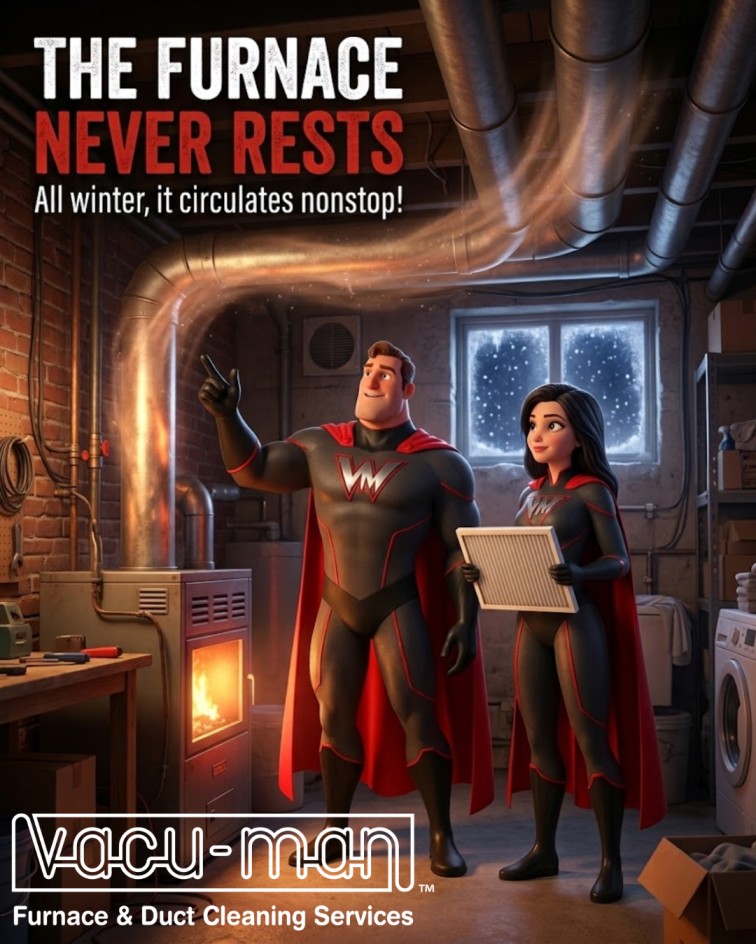
When the furnace runs around the clock in winter, it recirculates your home’s air on a constant loop. In a sealed house, that means whatever is in the ductwork, dust, dander, and debris, gets pushed through every room again and again. A clean system makes that constant circulation a benefit rather than a problem.
What happens when the furnace runs constantly in winter?
When the furnace runs almost constantly, it moves your home’s air through the ductwork over and over, all day and night. In summer the system rests between cooling cycles, but in a cold Ontario winter it can run for long stretches, which means the air is being recirculated far more than at any other time of year.
That constant circulation is not inherently bad; it is how the house stays warm. The question is what the air picks up on each pass. If the ducts are clean, the system circulates clean, warm air. If they are loaded with buildup, every cycle redistributes that buildup through the home. Because Health Canada notes Canadians spend about 90 percent of their time indoors, winter is when that recirculated air matters most.
Does a sealed winter home make indoor air worse?
It can. In winter the windows stay shut and fresh-air exchange drops to its lowest, so the home becomes a closed loop. Whatever is inside, including whatever is in the ductwork, stays inside and keeps circulating with little dilution from outside air.
This is the core reason winter indoor air deserves attention. In milder months, open windows dilute indoor pollutants naturally. Sealed against the cold, the house relies entirely on its HVAC system and filter to manage the air. The Health Canada residential indoor air quality guidelines point to this buildup of indoor particulate as a primary concern, and it concentrates precisely when the furnace is working hardest.
What is the furnace recirculating all winter?
The furnace recirculates whatever has collected in the system: dust, pet dander, pollen tracked in from earlier seasons, and general debris, along with the fine particles the filter does not catch. All of it rides the airflow from the returns, through the furnace, and back out the supply vents.
The components that hold the most are the ones a homeowner never sees. The blower fan, coated after months of use, re-suspends debris on every rotation. The duct runs and furnace cabinet hold the rest. This is the buildup that constant winter running keeps stirring back into the air, and it is exactly what a professional cleaning removes.
Does constant running wear out the system faster?
Yes. Running for long stretches is harder on the system when it is fighting resistance from a clogged duct network or a dirty blower. The motor works harder to move air through the buildup, which accelerates wear and drives up energy use over a long heating season.
A clean system runs with less strain, so constant winter operation costs less and takes less of a toll. Natural Resources Canada points to clean filters and unobstructed airflow as key to efficient, longer-lasting equipment. The difference between a clean and a clogged system is most expensive in the months the furnace never gets a break.
How does a clean system change constant circulation?
A clean system turns constant circulation into a benefit. When the ducts, blower fan, and coil are clean, running the furnace frequently simply moves clean, filtered air through the home continuously, which actually helps air quality rather than hurting it.
This is the key shift. The same nonstop running that spreads dust through a dirty system distributes clean air through a clean one. Vacu-Man, certified by CNADCA, cleans the full system so winter circulation works for you. Keeping the fan running for steady circulation is only a good idea once the system behind it is clean. You can see what a full cleaning covers on the cleaning process page.
What simple steps help during heating season?
A few steps make winter circulation cleaner: change the furnace filter more often during heavy-use months, keep supply vents and returns clear, have the ducts cleaned before or early in the season, and run the fan for steady circulation once the system is clean.
The filter is the first line of defence, and it loads faster when the system runs constantly, so check it monthly through winter. Keeping vents clear lets the system circulate evenly. And a cleaning before the season means the furnace starts its hardest months with a clean slate. Homeowners in Oakville and Milton often book early to get ahead of the constant-running months.
Frequently Asked Questions
Is it bad to run my furnace fan all winter?
Not if the system is clean. Running the fan continuously gives steady circulation and more even temperatures, which is a benefit when the ducts, blower, and coil are clean. If the system is dirty, constant running just spreads that buildup, so a cleaning first is what makes continuous circulation worthwhile.
Why does my house feel dustier in winter?
Because the sealed home recirculates its air constantly with little fresh-air dilution, and the furnace running nonstop keeps stirring whatever is in the ductwork back into the rooms. A clean system and a fresh filter reduce how much dust circulates, which is the most effective way to cut winter dust at the source.
Does the furnace running more mean I should clean more often?
It is a good reason to clean before the heating season rather than after, so the system starts its heaviest-use months clean. The constant running does not change the general three to five year interval for most homes, but timing the cleaning for fall means winter circulation is working with a clean system.
Make Winter’s Constant Circulation Work for You
Your furnace will run hard all winter; the only question is what it circulates. A clean system turns that constant airflow into clean, warm air instead of recirculated dust. Contact Vacu-Man to book a cleaning before the furnace settles in for the season. A CNADCA-certified company serving Hamilton and the surrounding area for over 45 years.
The furnace does not take a winter break. Give it clean air to circulate.